We aim to conduct our lives in a sustainable manner – to consciously live each day as stewards of God's gifts – both natural resources and our own individual resources

Pages

Thursday, December 29, 2011

Shoreline Farm Supply- the Back Story.

My wife gave me two bible verses one day.  I am positive her intentions were not to point out my faults, but was reminding me of God’s calling for us.  So, one night as I crawled into bed, I noticed I had a post-it note on my pillow.  Written on it were two references of bible verses from Thessalonians.  Can’t say I ever read them before, honestly I had to look up where Thessalonians was. The verses were a warning about the dangers of being idle or lazy and hanging out with those that are.

1 Thes. 4 10-12
…we exhort you, brethren, to do so more and more, to aspire to live quietly, to mind your own affairs, and to work with your hands, as we charged you; so that you may command the respect of outsiders, and be dependent on nobody.
2 Thes. 3 6-15
Now we command you, brethren, in the name of our Lord Jesus Christ that you keep away from any brother who is living in idleness and not in accord with the tradition that you received from us. For you know how you ought to imitate us; we were not idle when we were with you, we did not eat any one's bread without paying, but with toil and labor we worked night and day, that we might not burden any of you. It was not because we have not that right, but to give you in our conduct an example to imitate. For even when we were with you, we gave you this command: If anyone will not work, let him not eat. For we hear that some of you are living in idleness, mere busybodies, not doing any work. Now such persons we command and exhort in the Lord Jesus Christ to do their work in quietness and to earn their own living. Brethren, do not be weary in well-doing. If anyone refuses to obey what we say in this letter, note that man, and have nothing to do with him, that he may be ashamed. Do not look on him as an enemy, but warn him as a brother.
Shoreline Farm Supply
About 6 months ago I was becoming frustrated with the availability of non-GMO, open source seed, good quality local feed for our animals.  It was nearly impossible to get.  What was available was filler byproduct feed from the large Agri-companies was very abundant and filled with stuff I wouldn’t dream of feeding my family.   I presented my wife with a thought.  We should open a feed store. I can’t remember what look she gave me or why she agreed.  I am sure she didn’t really know what she agreed to…although I didn’t know what I was getting into either.  About 5 months ago, we formalized the beginning of our new feed supply business- a venture my 8 year old is very proud of (she tells everyone my dad and I started a feed business).  My father joined us in this venture as well, a big step of faith for both him and me considering our challenged relationship of the past.  Staying at home with my two girls and continuing to push or responsible living series, this gave us the sort of needed flexibility in the workplace I needed.
Sourcing as much local, open seed source, sustainably farmed feeds seems like a simple good idea.  Not overcharging for it seemed like a good idea too.  The mission of Shoreline Farm Supply was hence defined.
The First Feed Run
With $500.00 and just enough gas to make a round trip my father and I made our first feed mill pick-up.  It was a grueling start, we had truck problems almost ran out of gas, and was hauling feed with my two young children and a dog on a 5 hour turned 14 hour adventure.  But we made a friend at the mill; Tom, the owner.  It wasn’t until 5 weeks later that we realized that we had a friend.  He was a hard nut to crack and eventually he came around to embrace our business model- cash up front only, we will never ask for credit…oh yeah…and we are a little bit out there.  He still probably thinks we are crazy.  After it was all said and done, we figured we made about $0.50 on the first feed run- if you don’t count the cost of the gas or vehicle repairs, don’t pay ourselves or reimburse ourselves for anything and add $400 in my dad’s money, but we did it.  Things have improved a little bit since then, although not much.
We have since cultured wonderful relationships with customers, farmers, mill operators, warehouse managers and family.  We are now talking about moving tons of feed versus bags.  We are supplying feed to hundreds of customers, helping out small struggling farms and families when we can and using good old fashion bartering and hard work where necessary.
I am not sure I am a good business owner, only time will tell.  I am sure that I couldn’t do it without my wife’s or father’s support.  Of course, when it comes down to it, we are only God’s stewards of what He has entrusted to us.  God willing, we will continue.

Tuesday, June 28, 2011

What we do about shopping?

Purchasing products may seem like a simple task when looking at our responsibilities as Christians trying to live more sustainable lives.  While we do look at local responsibly grown, packaged and distributed products, one thing is more important to us; and probably should be to more Christians.  Let me start by asking this simple question: Why do Christians insist on being consumers on Sundays?  I am not interested in debating which day is traditionally the Sabbath or which day should be the Lord ’s Day.  As Evangelicals, we observe Sunday as the day set aside to focus on God.  What is more important is asking ourselves what our obligations are to those in the community who have to work on Sundays because of our demand of their business.  What are we telling them about us, what we believe and how important they are to us…as Christians?  We are not talking about essential services, but think of all the coffee stands, grocery stores, gas stations, restaurants, department stores, real estate agents, and any and all non-essential services.  I am not advocating hurting business, but adjusting our spending habits to allow businesses to adjust theirs.  It is about wants versus needs. So what can one Christian do?  Let’s see.

Saturday, June 18, 2011

What are we doing about our natural resources?

Natural Resources
§  In one of Jesus’ parables (Matt 25:14-30) three servants are entrusted with the wealth of their master, each one only received what they were capable of handling.  The first two servants worked with the resources they were given and doubled their master’s value. The last did nothing and sat on the wealth they were given.  The last servant was punished for being lazy with what they were given.  Why did Jesus tell this story?   It tells us something about how God deals with us, his servants.  The parable speaks of the Master's trust in his servants; he leaves them with his property to use as they think best.  This was a test to see if the Master's workers would be industrious and reliable in their use of the property entrusted to them.  The master rewards those who are industrious and faithful and he punishes those who sit by idly and who do nothing with what they were given.  The point of the parable seems to lie in the servants' conception of responsibility and stewardship.  The servant who hid away the master's wealth was irresponsible.  The master expected his servants to be productive in the use of his wealth.  What do the laws of economics have to do with the kingdom of God?   The Lord entrusts the subjects of his kingdom with resources and graces and he gives his subjects the freedom to use them as they think best. With each gift and talent, God gives sufficient the means (grace and wisdom) for using them in a fitting way. As the parable shows, God abhors indifference and an attitude that says it's not worth trying. God honors those who are faithful with even a little and they are entrusted with more! But those who neglect or squander what God has entrusted to them will lose what they have.  We have obligations to use what was given us in the Christian life.
We are given a command to be good stewards of what is given to us and are expected to utilize what is before us.  Trying to live a sustainable life forces us to rely on God to provide, but also helps us be good stewards of our resources, never exploiting or wasting what is given to us. 

What are we doing?
Rainwater harvesting
It may seem like a ridiculously easy thing, but we have learned that it may not be so simple.  Often we see rain barrels provided by various garden groups and counties.  Sometimes we see 4 or 5.  We recently passed a local church that was growing a large vegetable garden, I am assuming to donate to food banks.  It had three large (45 gallon) rain drums set up on risers to collect from the church gutters and water the garden.  It was very pretty looking.  Like this church we also started small.  We purchased and installed a large 100 gallon tank.  It was 7 feet tall and about 2 feet in diameter.  We set it up next to our small garden that measured about 10 feet by 10 feet.  It was very pretty and impressive; we even painted it to match the house.  In the start of the late spring / summer dry spell we were able to water for about 2 weeks, watering every three days.  Then our garden was dry for 3 weeks before any substantial rain came.  It wasn’t pretty anymore.
King County- 35 gallon barrel waters what?  It will irrigate a 4 foot x 4 foot garden for less than 2 weeks, watering every 4 days.  I know what the county pamphlet says, but we measured it.
We than thought bigger and installed a 3,500 gallon rain cistern.  Required us to be much more intentional about our decisions.  Our neighbors though I was making beer when they first saw the giant 10 feet tall, 10 feet in diameter cistern in our driveway.  I don’t drink beer, especially that much.  What do we do with that much rainwater (when it rains and fills in 8 hours of moderate rain)?  Flush all our toilets, wash all of our laundry, irrigate our entire yard, and water all our miscellaneous animals.
Note: Rainwater harvesting using existing buildings no longer is bound by natural resource depletion laws or runoff requirements under the Washington State Department of Ecology.
What it did was enabled us to use the money spent here, elsewhere.
Worm bin and composting
By utilizing our worm bin, it helped us reduce our garbage, allowing us to go to a small garbage can and save over $30.00 every bill.  It also teaches our kids how ecology works, provides us with worm tea concentrate (fertilizer), worm casings (compost) and worms for the birds (they have to eat too).  In short, we are using everything God gives us, even the waste byproduct.
Recycling and Yard waste myths- reduce, reuse, and recycle
Yard waste is a waste.  We need to use what we produce, even the byproducts. Grass / brush clippings and food scraps to worm bin or animals.  Food waste back to ground as compost (done correctly).
Recycling—why should we be concerned with reduction, reusing and recycling when the real problem is source packaging.  One of the very few good things I can say about Costco was their initiative to reduce overall packaging by changing the specs of how food and commodities were packaged.  Their incentive was to reduce the weight of packaging, thus reduce the cost of shipping. We need to push this business case to large scale producers.  Many intentional decisions we make are at least partially based on packaging.
We have a garden
What better natural resource that your own land.  We grow what we can and what we cannot grow on our property, we use local suppliers.  Apples, peaches, pears, strawberries, wild blackberries from the local green spaces.  Can and / or freeze everything for use out of season.

Why should we look at this radical change in behavior?
o   Helps us to be a good steward of what God has given us.
o   God honors those who are faithful with even a little and they are entrusted with more! But those who neglect or squander what God has entrusted to them will lose what they have. 
o   We have obligations to use what was given us in the Christian life. We are given a command to be good stewards of what is given to us and are expected to utilize what is before us. 
o   Trying to live a sustainable life forces us to rely on God to provide, but also helps us be good stewards of our resources, never exploiting or wasting what is given to us. 

Wednesday, June 15, 2011

Worm bin basics….


The time has come to review the use and the startup of a home worm bin. 
The first thing you need to do is get your hands on a bin. You can purchase pre-made worm bins from me directly, it’s fairly inexpensive. You can also look online or at your local nursery. Whichever type you go with, the size should be able to handle the food waste your house produces.   Generally each family member will generate about ¼# of food waste a day…on the average.  For a family of four (1# per day) you would need a 3’ by 2’ bin minimum and about 2# of worms.  The height is less important as the worms usually only live and eat in about 10” of material.  I generally recommend 12” in height.
Keep in mind that the bin does not need to be very deep. Red worms live and eat in the top six to eight inches of material.
Worms can be dug out of your garden, but there are two varieties of worms that are specifically raised for vermicomposting, composting worms do a faster job of breaking down organic matter from beginning to end. Go with red worms (AKA red wigglers) for a successful worm bin.
So, now the set up.
1.     Bedding- The most commonly used bedding material is newspaper, mostly because it is so readily available. Cardboard and peat are also good bedding materials. I prefer the shredded bill pile under your paper shredder.  Regardless tear up the paper or cardboard into fairly small pieces or strips- about 1” wide max.
2.    Moisture- Worms will not survive in a dry environment, so you need to moisten the bedding materials. Place your bedding material into a clean bucket and add some water. You want your bedding material to feel like a wrung-out sponge. A couple of drops should be released from the bedding if you squeeze a handful of it.  You may need to add more water or dry bedding to get the right level.  Break up any large clumps of bedding to allow for air to circulate…or worms. Add it to your bin…should be half full.
3.    Grit-  Add a shovelful of garden soil or finished compost to your bedding material. It will provide grit for the worms, as well as introduce microorganisms that will help the contents of your worm bin break down faster.
4.    Rest- Cover up the bin. Let it sit a few days without adding food so that the worms work their way down into the bedding.
5.    Placement- Where you place your bin is important. The bin should be kept in an area that stays between 55 and 80 degrees Fahrenheit. Temperatures outside of this range can be detrimental to the worms and slow production in the bin. Location must also be convenient. Favorite locations include under the kitchen sink, mudrooms, and basements.
6.    Feed your worms.  Spread the food scraps onto the bedding and bury slightly.  Try to keep it in one area, picking a different location every time.
Remember-  worm bins need your veggie scraps, tea bags, junk mail, cardboard (unwaxy).  Never feed dairy products, meat or oils. 

Enjoy!

Tuesday, June 14, 2011

What is the difference between Thrift and Sustainable Living?

Thrift (Synonyms: frugality, penny-pinching, scrimping, skimping) implies that you spend your time researching to find the cheapest product.
There seems to be a bit of confusion about Sustainable Living.  It is a thought that I am struggling to counter.  I frequently run into articles, blogs and websites that link sustainability with thrift, extreme seclusion from society or other varying degrees of isolation from the mainstream.  One thing that needs to be understood is moderation.  Sustainable living is a cycle, one that impacts many if not all areas of your life without really going to one extreme or another.  Pushing an ideal to the extreme actually disrupts the sustainable cycle in one or more ways.  Being thrifty definitely has a part in our lives, but not enough that we feel like we need to spend much time on it.  It is more important to look at how your decisions help you continue to live sustainably.
We always look for the best product that meets our specific needs, this may be the cheapest product, but it also may be the most expensive.  We always keep our financial sustainability in mind when making intentional decisions—no matter what we are doing; we still need to stay within our allowed budget.
One example for us is milk.  We purchase from Twin Brooks Creamy.  Milk is priced significantly higher in this case, but it is worth it to us to purchase this product.  It is what we are looking for in milk; tastes better, local creamery, pasteurized, non-homogenized, Christ centered dairy Mission Statement, family business.  We simply had to ask ourselves if we could afford it.
Another example is soap.  We found a “middle of the road” as far as cost and is actually cheap for specialty natural soap.  Our requirements were simple; it has to actually works, ALL ingredients are natural and locally sourced when possible, doesn’t irritate ultra-sensitive skin, and local (Made in Shoreline, WA).   Additionally we have developed a bartering relationship with the owner to customized requests of products and barter for items I could supply him.
In a nut shell (Our purchasing directive):
Look at not only where it is made, but sourced.  Local first, Regional second, USA third, Purchased at Source fourth, Quality standards - We expect what we purchase to last a reasonable lifecycle and perform properly.  Does it meet our financial sustainable requirements?
We choose this path to help develop and continue a local demand to keep the market growing, support our local business and local community, and help build community interactions to counter the anti-Christian mentality.
In short, we don’t look at cost first, but how it will perpetuate a sustainable lifestyle.

Tuesday, May 31, 2011

Joys of worm bins

Who wouldn’t like a worm bin?  Here are our top five reasons...

1.       Utilizes food scraps that your backyard animals can’t eat or if you don’t have backyard animals yet.  Hint, hint…yet.
2.       Keeps it out of the waste stream (even if you still believe all yard waste becomes compost).
3.       You can feed them all those shredded bills that the city can’t “recycle”.
4.       Makes a dark rich compost byproduct that adds nutrients to the soil without chemicals.
5.       Come on…its worms.  Educational for your kids; hands on and just plain fun to play with.
6.       Who wouldn’t like a worm bin…are you dead inside?
Red Wiggler

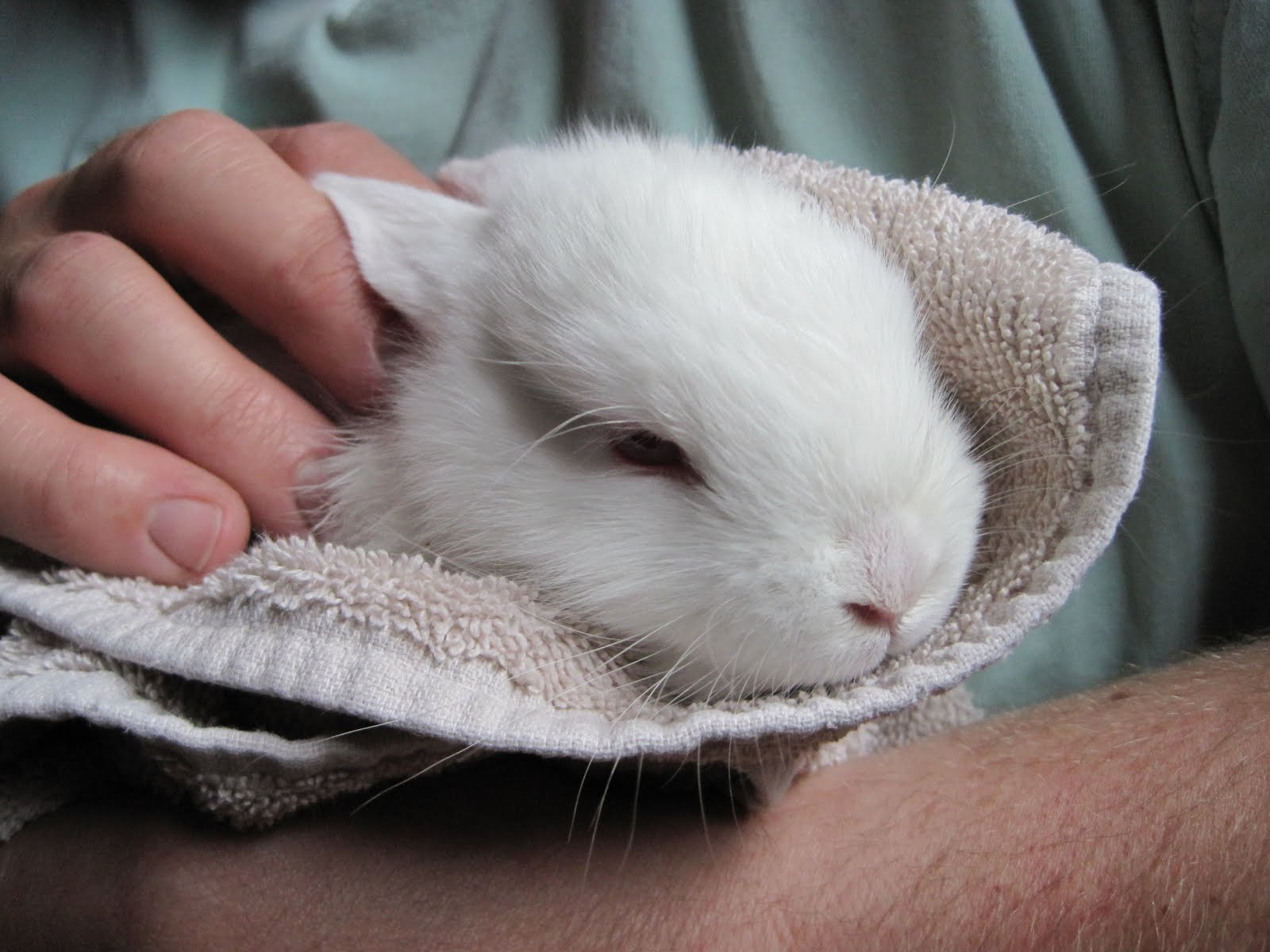
A little bunny TLC to bring back to optimum health


Bunny in a bucket.  A little bunny triage to keep it healthy.

Nothing like a warm bath.
Warm towel completes the day at the spa.